• Skip to primary navigation
  • Skip to main content
singaporeolevelmaths

singaporeolevelmaths

Simple Tips for Better Maths Results!

  • Pass With Distinction A-Maths Programme
  • About
  • Books
    • O-Level Maths Ten Years Series Books
    • O-Level Pocket Summary
  • Videos
  • What They Say
  • Contact

Archives for 2010

E-Math: Compound Interest Formula (Plus A Tricky Question)

Photo Credit:purpleslog

In today post,I'm going to talk about some concepts related to everyday life, we call this everyday Math. As you see the image on the side, you know I'm going to talk about money and where is money being 'stored'? Well, safely in the bank! So have you wondered why banks give you interest (peanuts though) for doing you a service of keeping your money safely? Should they charge you?

Today we are going to discuss about interest, compound interest in particular. I would strongly suggest you read these 2 posts before attempting the question first.

  1. Simple & Compound Interest
  2. Formula Usage on Simple & Compound Interest

These 2 posts discuss the basic concepts on the differences between Simple and Compound Interest as well as what you should note when using the formulas.

I came across the following question while doing an exampaper analysis for my student recently and it so coincides with the topics I want to discuss this week.

Example:

compound-interest-qn

Do the question yourself and check your level of understanding. It should take you 2 minutes.

Spot the error!

Common mistake (click here for image). Did you make this mistake too? Do you know where the error is?

Lesson Learnt

The correct working is shown here. (click)

compound-interest-formula-summary

Test out your understanding

If the original question is modified to compounded half-yearly with the principle amount of $75 000 being deposited at the same rate of 1.8% per annum, calculate the total amount at the end of 1 year. What would be your answer? Leave your answer in the comment section.

Filed Under: E-Maths Tagged With: compound interest, compound interest formula

A-Math: General Equation of Circle - Linked to Completing Square

In the previous post, I have discussed the standard equation of circle which is derived from distance formula.

The other equation of circle is known as General.

Example

general-eqn-circle-example

To answer this question easily, you need your completing square technique (Read about the steps here) which many students dislike!

You notice in the step by step solution, the general equation is converted into a standard equation through the following steps:

  1. Arrange all x terms and y terms together
  2. Start completing square
  3. Simplify all constants
  4. Set equation into standard equation of circle

General Equation to Standard Equation of Circle

convert-general-standard

Radius = 5 and Centre of circe = (4, 1)

I hope you have a better understanding on equation of circle.

Filed Under: A-Maths Tuition Tagged With: completing square, general equation of circle, standard equation of circle

E-Math: How to Use the Mean and Standard Deviation Formula (Plus: Calculator Shortcuts)

One of the first topics that many Secondary 4 E-Math students learnt is a statistics chapter known as Mean and Standard Deviation (SD for short).

The nice thing about this chapter is that the 2 most important formula are both available in the E-Math (subject code: 4016) formula sheet! No memorization required, just understanding of their usage.

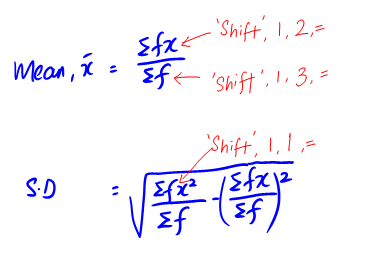
In this post, I will illustrate 2 methods to get the answers for mean and SD for ungrouped data (refer to example). The 2 methods are manual and calculator.

Example:

Given 15, 6, 18, 9, 2 and 4, find the mean and standard deviation.

Manual:

Mean and Standard Deviation Manual Working

Calculator, Casio fx-85MS:

  1. Mode, 2(SD)
  2. Enter the data in this manner, 15, M+ follows by 6, M+...
  3. To get mean: Press 'Shift', 2, 1,=
  4. To get SD: Press 'Shift', 2, 2,=

Here are some additional information you can obtain using the calculator:

Mean - SD from Calculator

Answers obtained through both methods are the same. By knowing these 2 methods, you can use either to double check.


Filed Under: E-Maths Tagged With: calculator skills, e-math formula sheet, mean, standard deviation, statistics, ungrouped data

A-Math: Standard Equation of Circle - Derived from Distance Formula

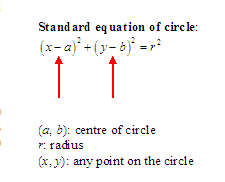
I notice many students had a hard time making sense of the standard equation of circle which is nothing new! The standard equation of circle is simply the Distance formula learnt in Coordinate Geometry in E-Math and A-Math.

Diagram for Standard Eqn of Circle

Standard equation of circle:

standard-eqn-circle

Example:

standard-eqn-circle-example

Test Yourself:

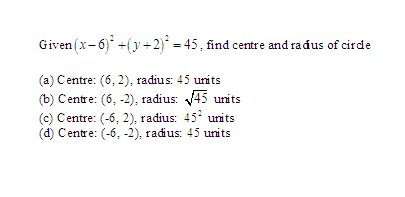
To ensure you have understood the standard equation of circle, attempt the question below by selecting the correct option and leave your answer in the comments section.

standard-eqn-circle-example2

In my future post, I'm going to discuss the other type of equation of circle: General equation of circle.

Do subscribe for updates to singaporeolevelmaths by filling up your email address on the right hand side bar of this page.

Filed Under: A-Maths Tuition Tagged With: coordinate geometry, distance formula, general equation of circle, standard equation of circle

Should I Drop A-Math (Additional Mathematics)?

Some of the common questions I get around this period (before registration of GCE 'O' level exams) is that 'Should I Drop A-Math?', 'Can I still study H2 Math in JC if I didn't take A-Math at O level?'

This post is also suitable for Secondary two students who will be choosing their subject combination at the end of the year.

'Should I Drop A-Math?'

This question usually pops out after a long period of unsuccessful attempts to pass A-Math or when it was recommended by teachers to drop the subject.

I have a poem to share: To Drop Or To Perserve On, Read the “Don’t Quit” Poem (Click to read)

'Can I still study H2 Math in JC if I didn't take A-Math at O level?'

I have also answered this question previously in this post: What happens if I do not take A-Maths?

Just a note : I have recently communicated with Temasek Junior College (TJC) Math teacher. For students intending to study H1 Math (Art Stream), 'O' level A-Math is not a requirement.

Filed Under: A-Maths Tuition, Exam Matters, Reader Question Tagged With: drop a-math, h2 math, jc math

E-Math: Introduction to Vectors

In Secondary 4, students are going to learn this chapter 'Vectors'. Some love it, most hate it.

In today post, I'm going to share some basic concepts on Vectors.

What is a vector?

A vector is a quantity that has direction and magnitude. Common examples of vector include velocity, acceleration, displacement and force.

The opposite of vector is scalar, a quantity that has only magnitude. Examples include time, speed, distance and mass.

As you see, vector is closely associated with physics!

How do we represent a vector?

vector
vector

Since vector involves magnitude and direction, there will always be an arrow indicting the direction. We call this vector

Vectors can be expressed in a column format called column vector. For this example, which means, starting from point A, 3 units to right and 1 unit up. It is similar to our coordinate system 3 units along x axis and 1 unit along y axis. In general, moving right and up have positive sign while moving left and down have negative sign.

In general:

How to find magnitude of a vector?

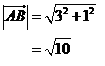
Using the same example,to find magnitude of , we use Pythagoras's Theorem. (Refer to diagram above)

Magnitude of can be written as .

I hope you have understood the basic concepts of vectors. In future post, I'm going to write more about the application of vectors.

Filed Under: E-Maths Tagged With: coordinate geometry, magnitude of vectors, pythagoras theorem, vector

  • « Go to Previous Page
  • Page 1
  • Interim pages omitted …
  • Page 5
  • Page 6
  • Page 7
  • Page 8
  • Go to Next Page »

Copyright © 2026 · singaporeolevelmaths.com · Talk to us at 88290998