
• Skip to primary navigation
  • Skip to main content
singaporeolevelmaths

singaporeolevelmaths

Simple Tips for Better Maths Results!

  • Pass With Distinction A-Maths Programme
  • About
  • Books
    • O-Level Maths Ten Years Series Books
    • O-Level Pocket Summary
  • Videos
  • What They Say
  • Contact

A-Maths Tuition

Top 7 Commonly Made Mistakes in Logarithm


How many of you would like to learn Math faster?
And how many of you would like to score more marks for Math?

Do you know that one of the fastest and effective techniques to grasp something fast would be to learn the mistakes that many others are commonly making and thus avoid them at all cost!

I am going to share with you the Top 7 Commonly Made Mistakes in Logarithm.

Please note all these are mistakes so do not follow instead you must be aware of them and constantly remind yourself not to fall into the same trap.

(Click on it to have a better view)


logmistakes-big.PNG
(Click on it to have a better view)

Hundreds of students receive a link to this file via their email so that they can save the the file and print it out for reference. If you want to be like them, be sure to subscribe to my mailing list. Click here >>
Filed Under: A-Maths Tuition Tagged With: common mistake, logarithm equations

Logarithm Equation Question 1


I met a student and she passed me this paper with this Lg question on it, asking me on the solution for solving this equation :\lg(x-2)=(lg3)^2

Coincidentally, I was asking a few O Level students of mine on which are the "Killer A-Maths Topics" for them. Logarithm, Indices, Surds is one of the common topic which is ranked high on their list.

Now back to the question.

PS:lg = log_{10}

Notice that right hand side of the equal sign is something you can compute using the calculator hence,

\lg(x-2)=(lg3)^2
(x-2)= 10^{(lg3)^2}

Use your calculator to find out the value of 10^{(lg3)^2} and the value is 1.69 ( round off to 3 significant figure) so the answer for this question is

x = 1.69 + 2<br>  =3.69<br>

I will be coming out with a series of posts on Logarithms since it is a "hot" topic for students :-) Subscribe to my feeds to be updated of this post.

Filed Under: A-Maths Tuition, Weekly Question Tagged With: logarithm equations

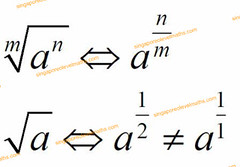
Converting Square Root to Fractional Indice


I was going through Indices with some of the students recently when I notice this common misconception.
\sqrt{a} is read as Square Root which means the "default" number outside the square root sign is 2 NOT 1 which a couple of students have thought about.

indiceslaw

I am going to write some tips on operations of standard form questions so I strongly suggest you subscribe to my feed if you have not done so,so that you will be posted when I write a new post .

Filed Under: A-Maths Tuition, E-Maths Tagged With: indices, indices law

Differentiation Basic Techniques


calculus.jpg

The big thing for Sec 4 A-Math ( Oh yar, since this blog has quite a number of visitors from other countries, I think it is important for me to mention that Secondary 3 - 4 is known as Grade 9 - 10 in other countries) is CALCULUS.

Well, you will hardly find this word in your A-Math textbook but you see a bulk of the chapters dedicated to Differentiation & Integration. These 2 topics are like freezing and melting processes.

Why? Because they are simply opposite of each other !

I am going to talk about the techniques of differentiation.

There are 3 main types for Sec 4 level ; you ought to learn these techniques real well and know when to apply each one of them as application problems follow after the basics.

  1. Chain Rule
  2. Product Rule
  3. Quotient Rule reserved for fractions. * But some fractions can skip this rule

My personal favourite is No. 2 - Product Rule. Well, let's see the technique in action.

Differentiate  with respect to x:

Now to do this, you can apply Product Rule - Differentiate Copy + Differentiate Copy

so

Now from this example, we notice some patterns, if you have a constant ( a fixed number) in front, you can simply focused on differentiating the portion with x involved. For example in this case, Focus on Differentiating so now, we don't even have to use product rule :

  1. Leave the constant in front
  2. Differentiate the portion with x involved by Power Front - Power Down by 1-Differentiate within also known as your Chain Rule. BINGO!

By realizing this pattern, it will save you some time and less pen ink as well.

Certainly hope it is useful.

:-)

alwaysLovely

Photo by just another paul

Filed Under: A-Maths Tuition, Learning Tools Tagged With: chain rule, differentiation, effective learning method, product rule

Binomial Expansion Teaches how to choose the RIGHT partner (:


I always like to share with my students what each Math topic has to do with their everyday life, particularly their future.

Yesterday, I did Binomial Expansion. It's about finding the RIGHT partner (: It's about mastering the skills of finding the correct match based on a set of factors.

binoqn1.PNG
Just like this question, you see that there are 2 brackets. 1st bracket is good for now. 2nd bracket needs us to do some expansion work by using the FORMULAE (It's provided during GCE O Level Exams but some schools don't seem to provide it for their mid year, strange)
Oh yar, there is NO need to remember the Binomial Expansion Formulae!
binoformulae.PNG
Then one of the questions that often pop up is " When do we stop our expansion for [TEX](1+\frac {x}{3})^{12}[/TEX]?"

To answer this question, it depends on what type of partners you are looking for.

[Read more...] about Binomial Expansion Teaches how to choose the RIGHT partner (:

Filed Under: A-Maths Tuition, Weekly Question Tagged With: binomial, Exam Questions, expansion

What happens if I do not take A-Maths?


Will students be allowed to offer H2 Maths (Maths Offered at JC Level) if they did not offer Additional Mathematics at ‘O’ Level?

The H2 Maths syllabus assumes knowledge of Additional Maths at 'O'  level.However, schools may allow students who did not offer Additional Maths at ‘O’ level to offer H2 Maths if they show an aptitude for the subject. These students must be prepared to put in the work to bridge the knowledge gap.

Depending on the route you are going to take, either Poly or JC, A-Maths is going to affect you in some ways.

[Read more...] about What happens if I do not take A-Maths?

Filed Under: A-Maths Tuition Tagged With: Maths at A Level

  • « Go to Previous Page
  • Go to page 1
  • Interim pages omitted …
  • Go to page 11
  • Go to page 12
  • Go to page 13
  • Go to page 14
  • Go to page 15
  • Interim pages omitted …
  • Go to page 17
  • Go to Next Page »

Copyright © 2023 · singaporeolevelmaths.com · Talk to us at 88290998